A small home works best when every area has a clear purpose—and there is still room to move. Start with your daily routine before you start shopping.
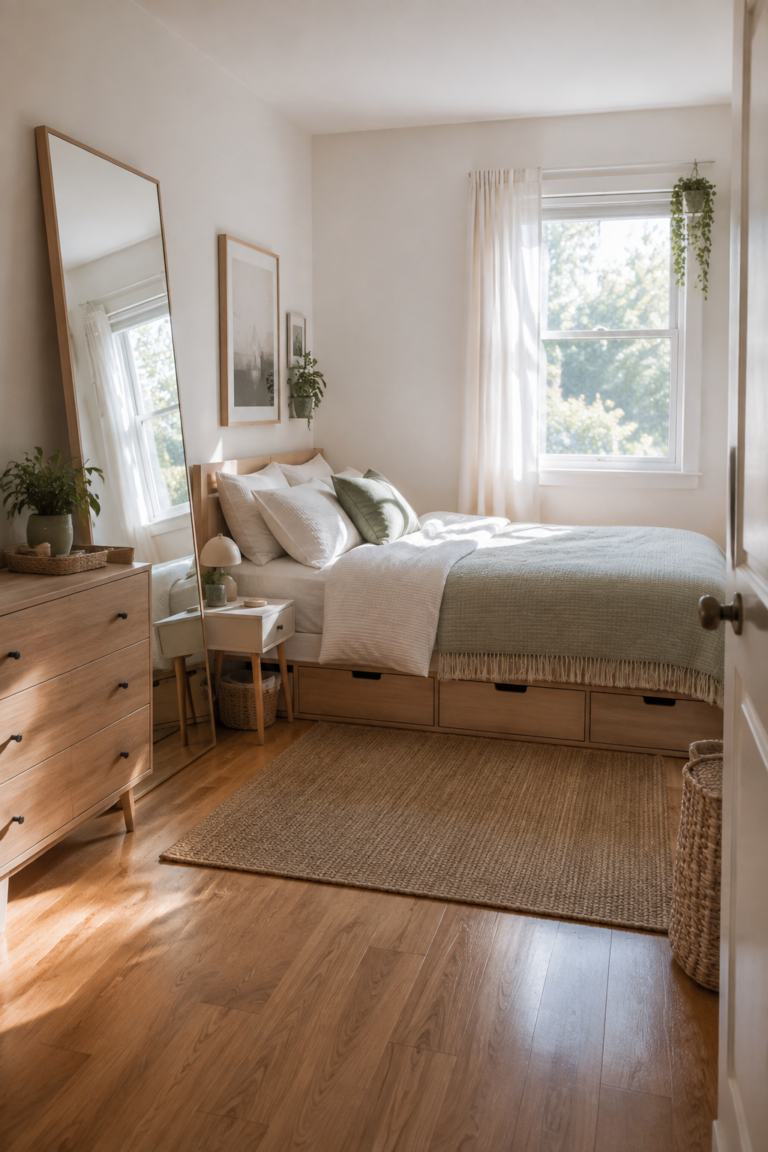
Start in the bedroom
Make room for the way you live.
The bed may take up most of the floor, but the space around it still has to work. Clear access to drawers, a comfortable route to the door, and reachable storage matter more than fitting in one more piece.
Read our seven small-bedroom ideas →AI-generated room inspiration.
A room-planning exercise
- Name the friction. Pick one recurring problem: a chair covered in clothes, a blocked drawer, or nowhere to set down a bag.
- Map what cannot move. Note doors, windows, outlets, heating, and built-in storage. Include the space needed to open each door.
- Test before you rearrange. Use removable tape, if suitable for your floor, to mark the footprint of a proposed piece. Walk through the room and test access.
- Try a no-purchase change. Move an occasional-use item away from a daily-use area. Reuse an existing basket before buying a new storage system.
Measure the usable space, not just the room.
A gap may look large enough for a cabinet until its door opens. Write down width, depth, and height, then separately note the space needed to use the item. Check the delivery route too.
Should I choose smaller furniture everywhere?
Not necessarily. Several tiny pieces can make a room harder to use. Start with the dimensions of the main furniture you need, then add only the supporting pieces that solve a specific problem.
What should I change first?
Choose the issue you notice every day. Improving access to a closet is usually more useful than styling a shelf you rarely touch. Test one change for a few days before moving on.