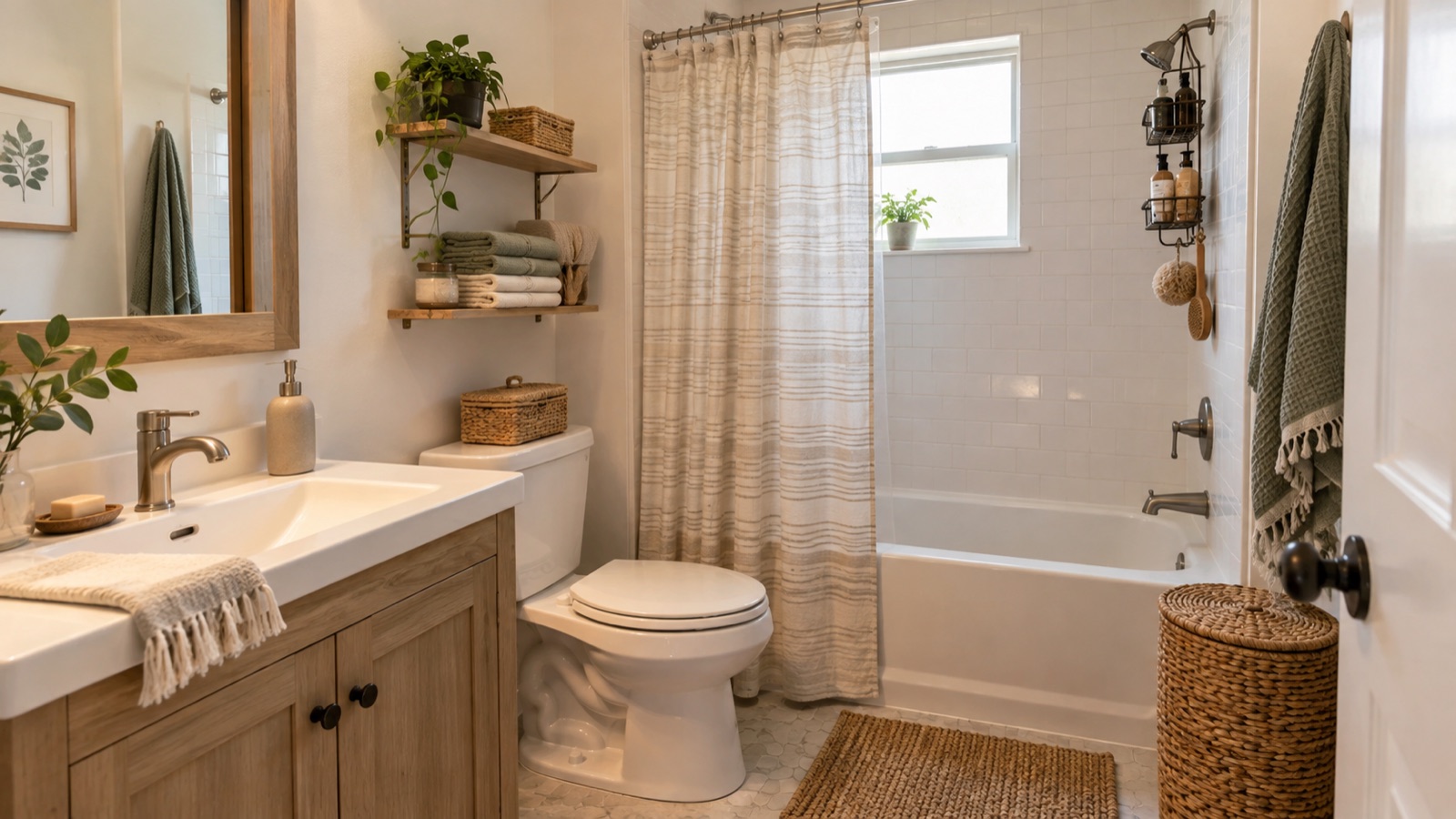
PRACTICAL ROOM GUIDE
A small bathroom can feel calm and inviting without becoming a display room. The most useful changes are usually simple: give everyday items a clear home, keep wet and dry zones separate, and make the things you reach for easy to access. Start with the room you have rather than buying a collection of matching organizers.
Start with your daily routine
Before adding storage, notice what happens during a normal morning and evening. Which items collect around the sink? Where do used towels end up? What do you have to move before cleaning? A useful bathroom layout reduces those small points of friction.
- Keep daily essentials within comfortable reach.
- Store backups and occasional items higher up or farther from the sink.
- Leave enough clear surface to wipe the vanity without rearranging everything.
- Use containers only when each one has a defined category.
1. Create one clear vanity zone
A crowded sink makes even a tidy bathroom feel busy. Keep only the products used every day on the counter, ideally grouped on one small tray that can be lifted when you clean. Move refills, travel products, and occasional treatments into a drawer, cabinet, or labeled box.
Measure the usable counter area before choosing a tray or organizer. Leave space around the faucet and avoid storing paper, electronics, or other unsuitable items where they are likely to get wet.
What to look for: a washable surface, a footprint that does not crowd the basin, and enough space for the few items you genuinely use each day.
2. Use vertical space where it stays reachable
A narrow wall shelf, compact cabinet, or over-toilet unit can add storage without taking up the main walking area. Reserve lower shelves for frequently used towels and toiletries. Lighter backup items can sit higher, provided they remain safe to lift down.
Before installing anything, identify the wall type, pipes, electrical zones, door swing, and the full depth of the proposed shelf. Follow the manufacturer’s mounting and load instructions. Renters should check their agreement before drilling and can prioritize freestanding pieces that fit securely.
3. Use closed storage for visual noise
Open shelves are convenient, but a room full of small packaging quickly looks cluttered. Put visually busy categories—refills, cleaning supplies, spare products, and personal items—behind a door or inside a simple labeled container. Keep only a few attractive or frequently used items in view.
Do not hide so much that you forget what you own. Group like with like and check quantities before buying another backup. A container should help you see and retrieve a category, not become a place where unrelated items disappear.
4. Give clean and used towels separate homes
Fresh towels need a dry storage spot; used towels need room to hang and dry. Trying to make one hook perform both jobs usually creates piles. A rail provides more open drying area than a crowded hook, while clean towels can live in a cabinet, basket, or shelf away from splashes.
Choose hardware that suits the wall and the weight it will carry. Keep textiles clear of heaters, lights, and other heat sources, and allow damp fabric to dry fully before it returns to closed storage.
5. Keep the shower zone simple
Keep only the products currently in use inside the shower. A stable caddy or shelf that drains properly is easier to maintain than bottles spread across the tub edge. Remove empty packaging and wipe the storage surface during the regular bathroom clean.
Use products designed for wet environments and follow their installation instructions. Avoid improvised storage that can fall, obstruct controls, or create a tripping hazard. If a hanging organizer affects the shower fitting or door, choose a different location.
6. Add warmth through a few practical materials
Cozy does not have to mean crowded. Warm wood tones, a muted towel color, a washable bath mat, and one small piece of art can soften a mostly white bathroom. Repeating two or three colors creates a calmer result than adding many unrelated decorative objects.
Choose bathroom-suitable materials and keep décor away from direct water and heat. If you use a plant, select it for the room’s actual light and humidity rather than relying on appearance alone. Artificial greenery is a reasonable alternative when the conditions are unsuitable.
7. Make the room easy to reset
The best bathroom system can be restored in a few minutes. Give laundry, used towels, daily products, toilet paper, and cleaning supplies an obvious destination. If an item repeatedly ends up somewhere else, the assigned storage may be too far away, too full, or awkward to open.
- Return daily products to their zone.
- Hang towels so they can dry.
- Clear the floor and vanity.
- Replace empty items only after checking existing backups.
A sensible order for improving a small bathroom
- Remove expired, empty, and unused products.
- Identify the one surface or routine causing the most frustration.
- Assign clear zones before buying containers.
- Measure the intended space, including doors and plumbing.
- Add only the storage that solves a defined problem.
A cozy bathroom is not the one with the most accessories. It is the one that feels straightforward to use, quick to clean, and comfortable at the beginning and end of the day.